Father Tom Hand, S.J.

L-R: Sister Sophie, Father Tom Hand, and Sister Assumpta

After his ordination to the priesthood in 1951, Fr. Tom was assigned to Japan where he spent 29 years. Tom had a life-long love affair with Japan, its people, its culture, its literature and art, and, most especially, its spiritual traditions of Buddhism and Zen. While teaching English at high schools and junior college, Tom entered into a deep study of Eastern spirituality under Yamada Koren Roshi, a Zen master.

For many years Tom was a retreat director and spiritual guide at Kamakura. “It was his own spiritual journey and a deepening appreciation of his Christian faith through the insights and practice of Zen that shaped Tom’s life and ministry.” (Obituary) Hando came back to the States to attend the School of Applied Theology in the Bay Area, a program established by his friend and classmate, Gene Zimmers. It was a great day for us at the newly formed Mercy Center when Hando agreed to be on our Center Staff in 1984. Hando was very clear about the meditation program he envisioned. One by one he set up his programs: Daily morning sitting, Wednesday evening meditation, Center Day on the last Sunday of each month, weekend and longer retreats. Finally, a month-long study for those who wanted to facilitate groups.

At our staff meetings Hando always had great ideas about the Center. He was also quite practical. It was Hando who suggested we name our meeting rooms by tree names. (I notice he kept avoiding such trees as “Linden.” I think it was because his friend, Sister Agnes Lee, couldn’t pronounce “L’s.”) Hando helped us see Christianity through a different lens – to see how “Christian religious life may assimilate the ascetic and contemplative traditions whose seeds were already planted by God in ancient cultures prior to the preaching of the Gospel.” ( W. Abbott, S.J., Documents of Vatican II, 1966). Even in his first year with us Hando was responsible for the first of our major conferences: “The Human Path, A Christian-Buddhist Dialog Conference. “

Truly Hando was a man of expansive thought but little ego. As I use the word “thought” I am reminded that he was always trying to get us – and himself – out of our heads. I remember a sign he saw once and really took to: “Lose your mind and come to your senses.” For a man with an inquiring mind and trained in the art of Jesuit reasoning, this doesn’t seem to have been easy for him.

But I want to speak about Hando’s influence on the Community of the Sisters of Mercy. He faithfully celebrated daily Mass for us for twenty years. You know the wonderful conferences that Hando gave during retreats, Center Day and Wednesday evenings, but most of you don’t know of the morning homilies. They were short little gems – always very insightful, always reflecting his current reading. (We always knew what book he was reading that had sent him off in pursuit of yet new insights. I was personally just a little glad when he finished the book on “holograms”!) In speaking about Hando and the community, I have to tell you about the breakfast table! You may have discovered that Hando had very definite ideas about how the U.S. Government should be run. Our conversations at breakfast were very exciting sometimes. We solved the problems of the world – only to be amazed that when voting time came, the rest of the world did not agree with us!

If you had ever driven any place with Hando, allowing him to be a passenger so that he could look around, you discovered what delight he took in everything. He chuckled away about things the rest of us had totally missed. This was one of his beautiful qualities. He really enjoyed ordinary, simple things!

Well, dear Hando, we still miss you but we are so delighted that your ministry is carried on so wonderfully by Fr. Greg Mayers. We were worried that the meditation program would gradually disappear at Hando’s death. Not so! Fr. Greg has led the group in ways that has even deepened the practice. And he has enabled members of the group to help facilitate the program. We have been aware of this especially in these past few weeks when Fr. Greg has been ill and his meditators have carried on with Wednesday evenings and Centering Sunday. We thank our God for these two gifted men, Fr. Tom Hand, SJ, and Fr. Greg Mayers Roshi, who have brought such richness to our Center.

Fact and Fantasy

Fact and Fantasy

The year is 1450.  A small acorn that has found a place to nestle in the soft earth begins to disintegrate.  It sends out small “feelers” that become tender roots.  The sun beats down life-giving rays and soon above ground the beginnings of a young tree can be seen.  It is a California Oak.

The year is 1650.  A small group of Muwekma Ohlone Indians, coming from the coast on their way north stop at a hilly site; the temperature is mild and although there are winter rains, they find this a place that is conducive to a peace-filled life.  They settle in.  The women do their cooking in the shade of a lovely, tall and sturdy tree.  Young children swing on welcoming tree branches.  It is our California Oak.

The year is 1801 and it is the year of the great wind.  There is disaster everywhere.  What had been rather sturdy dwellings, shelters for those who had made home here, are blown away.  Trees are uprooted and thrown down with an impact that echoes for miles around.  One noble tree refuses the violence of the winds and remains solidly in place until the final gust that sends it toppling over on its side.  It remains there, apparently uprooted and dead but no, there is life there.  It remains undaunted and even in its prone condition, continues to grow.  It is our California Oak.

1912.  The 39 acres are a flurry of activity.  The ground is being prepared for building.  This is choice land, a part of a larger area given by William Ralston to his friend, Ansel Burlingame, Ambassador to China.  A young man named Frederick Kohl and his bride, Bess superintend the building of their mansion.  It is to be a show-place on the Peninsula – a place of lively entertainment.   A stately fallen Oak looks on silently from down the hill.

1924.  Visitation-cloaked women make their way down the Peninsula to look at a property for their Motherhouse.  They have been shown another possible site this very day at a fog-laden area near Lake Merced.  Intuition, inspiration, good sense led them further to discover a green, oak-studded land, made sweet by the sight of daffodils and the scent of lavender.  They see a stately mansion sitting amid rolling hills, a mansion complete with green house and carriage house. It looks too grand for a motherhouse but the price is right:  $235,000.  They stay.  A stately fallen Oak wonders what will happen now.

1931.  The humans are moving closer.  In fact, too close for comfort for our Oak.  They have outgrown the mansion and chosen a site “down the hill.”  Young teenage school girls bring noisy life to the mansion as it is converted into a high school for girls.  A large, structure is completed “down the hill,” a structure capable of accommodating over 100 women.  The building is dedicated and occupied.

1950.  The women have grown yet larger in numbers.  The land is dotted with white and black veiled women, women who move in a stately manner, arms concealed in flowing black sleeves.

1964.  Another building dedicated!  They have outgrown what they call, “Motherhouse.”  And so they add a large wing with almost 100 bedrooms and large meeting rooms to house new members.  They call it the Coolock Wing. 

Where will it all end?

1974.  Expanding now to the north western part of their acreage the women build a final structure – a rambling home for their retired and infirm.  Our old Oak looks on and is not surprised at all when a new young Oak is planted close beside its very trunk, under its protecting branches.  The young oak takes root on what is surely sacred ground.

1978.  While the retirement facility is nearing capacity, the formation and new members, building is more and more sparsely occupied.  The old Oak nods wisely.

1981.  The women have met to make an important decision.  Shall this wing remain idle or are there uses for such space that would further the mission?  A questionnaire is circulated; a decision in made.  The old Oak breathes a sign of relief.  It will feel at home still.  The building is to become a spirituality center, a Mercy Center.

1990.  Oh they come in droves now! – people of all ages, of all faiths – so many from so many places.  They come for one purpose.  They come because they seek God.  The old Oak is not surprised at all!  It always knew it stood on Holy Ground. 

1994.  It has been over 500 years since our old oak came forth from that tiny acorn.  Now it has come to the end of its days.  No longer do new shoots of life come forth from its branches.  And one by one large limbs have been cut off.  The time has come to remove our beautiful Oak.  The Young Oak looks on sadly as the desecration takes place – as the power saw hits what remains of its stately companion.

From death comes new life.  In the now vacant ground where the old Oak has been uprooted, grow flowers in abundance and with the flowers the busy activity of new life.  And the women who built by the stately Oak are not alone anymore.  They have joined with others, sisters, associates, collaborators from across the continent, others who hold the same rich heritage, claim the same charism, vision together their future.

And so we rejoice with the young Oak as we share a Mercy heritage, rejoicing in the growth of all its branches, growth that has been shaped by the soil of very different geography, different but nonetheless sacred ground.

Doors

The front door of Mercy Convent and now the entrance to Mercy Center

Doors

A major door for all of us was the “receiving station” door (the one next to the dish washing machine room.)  Everything happened there.  It was access for departure in the one car that we had.  Of course, we didn’t drive; one of “the men” was entrusted with driving us to the few places we went.

In the days of Mother Monica, it became very necessary to be on time.  I suspect that Mother Monica was made the superior with the intention of getting us in order.  Just one area: you see, before Mother Monica, the time of leaving from the receiving station door was relative.  Not so with Mother Monica.  If you were not there when the car was supposed to leave, it left without you.  Mother Monica also assigned seats in the car.  Well, when all were in place, off you went in the big black car.  

It was through the receiving station door that the laundry left.  Our laundry was done on the big industrial machines at St. Mary Hospital.  The laundry would take off on Monday morning and come back on Friday and there would be a major house movement as the laundry was all sorted out on the dining room tables and items (usually) returned to their rightful owners or as we were schooled to say, not OWNERS because everything was “TO MY USE.”  

The good thing about this laundry service was that we would send things all over the Mercy Network.  For instance, if I needed to send something to my sister at St. Gabriel’s, I would simply put her name, her convent with the words “via laundry,” leave it in the receiving station and it would be at its destination that very day.

St. Mary’s Hospital had a liking for us and very often sent scones or other goodies back to us via laundry.  It was a great system AND a lot of postage was saved.

There were other doors of importance for us, for instance, the “school door.”  That was the door near the present day Emmaus community.  When we left in the morning or when we came back from high school teaching in the afternoon we would come in that door – never the front door! I don’t know if the school sisters who taught at OLA or St. Catherine’s used that door.  I suspect they used the receiving station door because that would be closer to the school bus where “Frenchie” (Pat Kennefick) would be waiting to deliver his prizes to their respective school sites.

Into that school bus, along with our Burlingame elementary sisters went what we called, “The caravans.”  The main meal was at noon, not  at night.  Each school would receive three containers of hot food for lunch:  meat, potatoes (never pasta in those days) and veggies.  Mercy High School sisters would also receive a caravan.   The novices would prepare the caravans and often they got it mixed up.  Perhaps the high school would get two meats and no veggies while St. Catherine’s would get two veggies and no meat.

Sometimes I would be sent to one of the schools to help out Sister M. de Chantal with piano teaching.  When I would get on that school bus all eyes would be turned toward me and at least one sister would voice their concern: “Does the kitchen know you are coming?”  Well, they wanted to make sure there would be enough food. 

Another important door, of course, was the middle door in chapel.  We arrived in chapel through that door.  Sr. Jean Evans had every sister’s walk down pat.  She would regale us with her mimes.  She would imitate the walk of various sisters, and we would guess who it was.  We were always correct because Jean did her mimicry very well.

Through this particular chapel door, we would exit as a group, genuflecting in twos and proceeding out the door to the dining room.  We would be reciting the Magnificat or a psalm.

One time Sister M. Martin and Mother Thomasine were in the process of genuflecting as they were exiting from chapel and one of them fell, dragging the other down with her.  They got in a fit of laughter that lasted until they arrived in the dining room.   We only had “talk” for supper on occasion, but we got it that night!

Protective doors

When we started Mercy Center, intrusion became a major issue.  A sister would be in her room and a Center guest would walk in, expecting to inhabit a room that had the same number as the one she was given when she arrived at reception.  The numbers of the Convent bedrooms and the Center bedrooms were the same.  It was easy for a person who had never been to the building to wander unknowingly over to the Convent side.   Not good!

 Jeff Snyder solved our problem by putting keypads on all doors that led to the Convent.  I might have been the only one who resented this.  For me, hospitality was the best thing we had to offer and locks presented another message.  Totally wrong, Suzanne!  Now I value these locked doors.  I have not yet descended to that level of dementia where I can’t remember my code!  When I do, there is an easy code.  I won’t print it here because if I do – there goes our security.

Our Front Door

I forgot to mention such an important door – our front door!  Until rather recently there were two doors, the storm door and the entrance door.  Somewhere along the years the entrance door ceased to function right and so the storm door was refashioned to become the entrance door.  And a handsome door it is!

It was through this door that we originally entered the convent.  It was through this door that our parents came to visit on visiting Sunday.  Now it is the door that welcomes about 18,000 people a year as they come to Mercy Center.  It is the door that admits the “morning sitters” who come to pray at 6:30 A.M. and the Sunday Community who join us for Mass each Sunday.  Indeed our front door has become a symbol of the welcome we want to extend to all.

Not to end this on a gloomy note but just to make it complete, this is the door through which we make our final exit when “our life is changed, not taken away.”  We have the lovely custom of processing out of chapel, out the front door to stand and sing our final hymn of farewell.  “For the beauty of the earth, for the beauty of the skies.  For the love which from our birth over and around us lies.  Lord of all, to Thee we raise, this our hymn of grateful praise.” 

Sister Clareta

We have had some major community characters through the years.  Perhaps the Sister who would come to mind first among our Burlingame members would be Sister Clareta Doyle.

There are so many stories in our community lore about this woman that it is hard to choose which ones to include. I think if I would ask around the community everyone would agree on this first memory.

Clareta was driving at night in San Francisco when she saw an elderly woman crossing the street, shopping cart in tow.  Clareta, a woman with such a soft heart, stopped the car immediately and rushed over to the woman so that she could be of assistance.  Much to her surprise, the “woman” had a masculine voice, and that voice was rather sharp and urgent as it said, “Lady, get outa here.  This is a ‘Sting Operation.’ ”

There are many stories told of Clareta and Tina.  Tina was the “watch dog” for Shalom Convent.  How much watching he did is questionable unless it was watching for treats. 

Well, in order to make it possible for Tina to enter and exit the convent, a doggie door was installed.  Unfortunately, directions on how to get out and in were not included in doggie language.  And so our dear friend, Clareta, was seen crawling through the door as she tried to show Tina just how it is done.

Sister Mary Peter McCusker had been in Peru for a couple of years.  Peter told this story that occurred upon her return to the states.  She was driving along and noticed Clareta in the pedestrian walk waiting for the light to change.  She noted how nice Clareta looked.  Her outfit seemed so put together.  However, just as she was thinking this, Clareta’s half-slip fell to the ground.  Well, Peter thought- as you probably would – “There is our Clareta!”

When Clareta was in the car as driver she had one problem.  She found it very hard to stay awake.  And so she took to chewing gum and chewing it very vigorously. This was quite something to watch but it did seem to do the trick.

Clareta had a favorite pair of earrings.  They were quite large pink flamingos.  She would volunteer to answer phones at Mercy Center.  She would get very sleepy and despite her determination to stay awake, she would drift off.  It was quite a sight for those passing by to see this elderly head slumped over but the flamingos, firmly attached to Clareta’s ears, standing at attention on the counter.

In the days that we were preparing for Clareta’s funeral there was quite an extraordinary coincidence.  Sr. Patty Creedon was coming over from Oakland as the funeral directors were bringing Clareta’s casket to Marian.  She had brought a flamingo with her.  When she got out of the car she stood at attention, holding the flamingo in reverence as they wheeled the casket in.  At the funeral someone got ahold of several flamingos and the path from the road to the front door of Marian was lined with flamingos.

Just mention the name “Clareta” to any of the Burlingame Mercys and you will see a smile and hear a heartfelt sigh, “Oh, dear Clareta!”

Christmas in the Convent

Christmas started with a bang – that is, with an organ bang.  I don’t know when the custom began, but I know that when I was a postulant in 1950, at 11:30 P.M. on Christmas Eve I let out all the organ stops and crashed into the feast with “Joy to the World.”  The novices and postulants had had to go to bed at 8:30 p.m., and 11:30 p.m. was their rising for Midnight Mass.  It was quite a welcome surprise for the postulants because things were so austere before Christmas that they were probably wondering if there would be a celebration at all.  Well, that organ let them know that this was a big day and indeed, it would be celebrated as such.

We must have opened presents from our families, but what I really remember are the “lumps.”  These were little wrapped up goodies with such things as soap, tooth paste and dimity papers etc. The lumps always contained a big candy cane and a large man-sized handkerchief.

Of course we had a Missa Cantata – sung high Mass.  And we sang “St. Angela’s Mass”–a piece of music that didn’t deserve the paper on which it was printed.  Despite the unworthiness of the music, we practiced it at our Sunday morning practices in Holy Innocents (now the Acacia Room.)  The poor school nuns had to leave on the school bus to attend the Mass at their respective school parishes.  But they had to attend that darn practice.  Sister M. Casimir led the practice but sometimes I had to do it.  There I was in my postulant outfit trying to keep my postulant cap on while I directed the singing, all the while hating the music.

I remember Sister M. Baptista (the community treasurer) coming late once.  She had to stand and wait for me to give her “the nod,” so she could sit down. Now listening to Sister M. Baptista sing was an event.  She had a vibrato that could shake the building if the building would agree.  But she was a sweetheart, and all the novices and postulants loved her.  She would nod at us in the hallways and “give us a hearty aspiration.” (Praise be to Jesus.)  She let us know just how glad she was that we had come to live at 2300. 

Sister M. Alexandrine was really in charge of sacred music in the house.  She had VERY sensitive ears and issued orders as to which stops were to be used on the organ.  I was such a “milk toast” and observed her restrictions.  Looking back on it now, I wonder why I was so complacent.  I had studied organ with Richard Keys Biggs, and I had been an organ major in college.  Well anyway, Alexandrine’s stop combinations were what I used – EXCEPT when I knew she was out of the house.  Then I let it rip!

On the subject of organ playing, Sister M. Juliana (everyone’s favorite) had a special position.  She was a non-singer and could be spared from singing the St. Angela Mass.  The first time I was playing for Mass, Juliana appeared in the organ gallery, arms in big sleeves except when a page turn was required.  This unnerved me and so after just one session of this I got up my nerve to say, “Thank you so much but I really don’t need a page turner.”  Wow, was she relieved.  She hot-footed it downstairs never to appear in the organ gallery again, when I was at the console.

On Christmas afternoon we all filed into the professed community room to be present when the three priests from OLA made their courtesy call.  We sat in formation while they sat at the head table and chatted with Mother Cyril, Mother Thomasine and probably Sister M. Assumpta.  Poor guys!  At least they had a good Happy Hour when they went home.

Speaking of Happy Hours, I recall an event that happened many years later.  My sister, Sister Pat, thought it would be great if we had a little glass of wine for Christmas dinner.  So off Pat and Sister Rosemary went to Lucky’s to make the purchase.  They got a big jug – probably Red Mountain!  Rosemary was carrying it out to the parking lot.  To her dismay, Father Fergus was coming along in the opposite direction.  Not wanting to encounter Fergus with this bottle in hand, Rosemary crashed into a telephone pole.  Fortunately the treasured “goods” did not break, and Pat and Rosemary continued on their way home.

Once they were home they had to pass through the hurdle of Mother Monica, the current superior.  Now of all the superiors, Monica would have been the best for any permission. I don’t know whatever happened in that superior’s office, but I do know that those little thimble wine glasses were not filled that night but a rather happy mold of Jello came forth!

Another Christmas I remember specially was when we lived in the High School Community.  Pat Ryan was superior, and another sister I will not name was the second in command.  Pat R. was traveling with my sister, Pat Toolan.  They were taking a group of kids to Europe for the Christmas holidays.  Alas, “the unnamed” was left in charge of us.   Mistake!

Things were going along ok – at least, no insurrection.  And then came the actual day of Christmas.  We all opened our presents.  (It was always amusing for us high school teachers.  The grammar school teachers had tables and tables of gifts that were given to them by grateful parents of students.  We high school teachers had one card table and that was plenty of space for all of our gifts; our one table was not full.)

Anyway, on this Christmas day we did indeed open our presents.  When everything was finished, to our dismay “The unnamed” rolled in a gurney and placed all our presents on the gurney.  Off she wheeled them to the closet in the superior’s office.  Now this had not even happened to us in the novitiate!  All was not well.  We were just plain mad.

Anyway, when Pat Ryan arrived home we didn’t even ask her how she enjoyed the trip.  There was a unison chorus:  NEVER leave that woman in charge again!

Note: “The unnamed” eventually left the community.  She was a fine woman, and I’m sure she lived the rest of her life well.

Chairs

A refurbished chair sits elegantly in the Dining Room.

Chairs: A Transformation

You may have noticed Ken Lahane of the maintenance staff driving out of the 40 acres with a truck load of dining room chairs.  Well, these chairs have a history.  They are chairs that are light weight and were originally placed in the bedrooms of the Novitiate-Juniorate (then called the Coolock Building). 

When we first started Mercy Center, I began to substitute these chairs for the ones that were in the “professed” dining room (now Dining Room A). I made the substitution, chair by chair.  I can’t remember my reason for doing so, but I do remember lugging those chairs from the bedrooms to our dining room and then lugging the dining room chairs up to the Mercy Center floors.  (Could be one of the reasons I have shoulder problems!)  Why did I do this?  

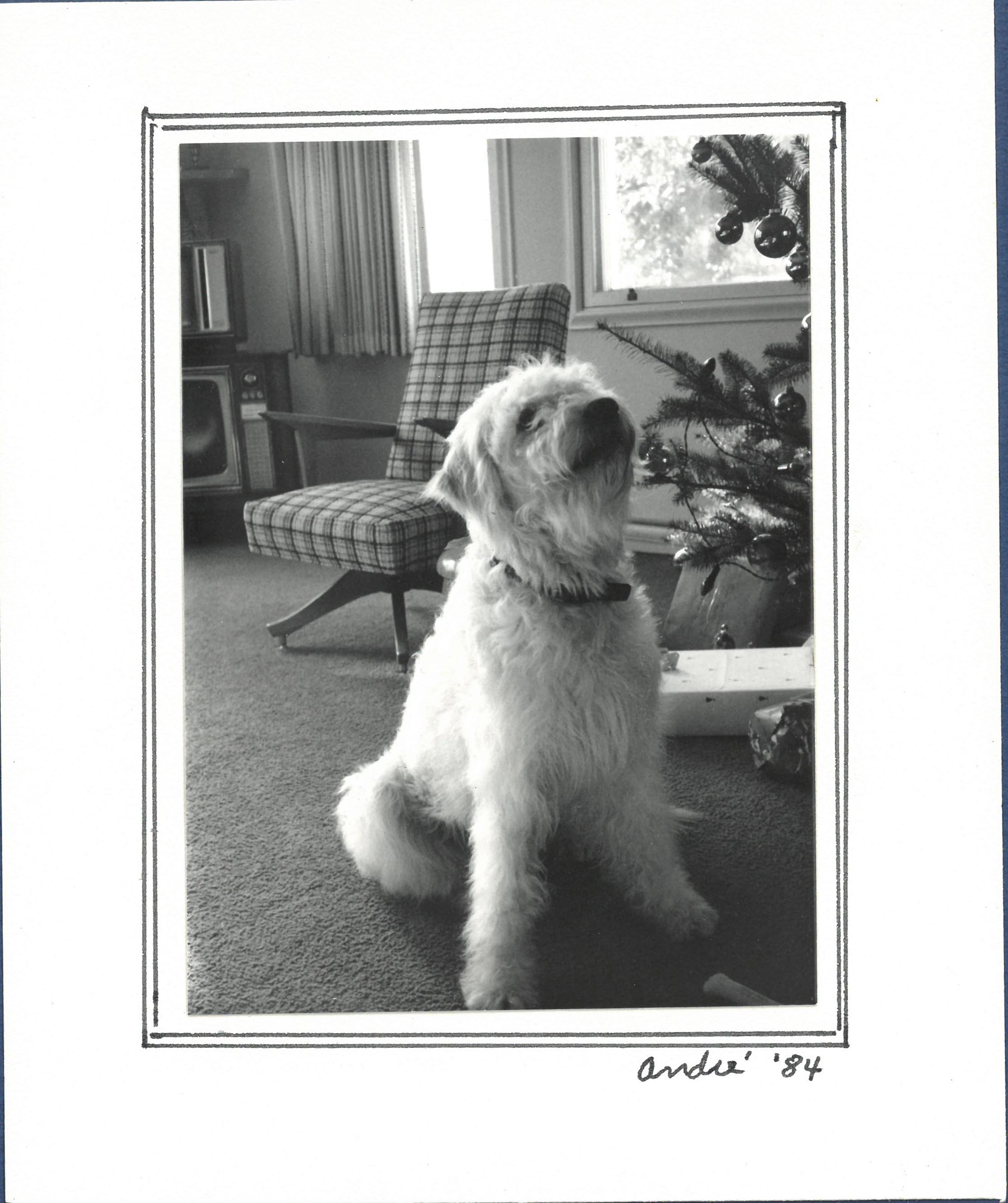
Being Director of Mercy Center was not a good fit for me!  I certainly lacked the skills necessary and seemed to find little jobs that seemed like a good idea at the time.  (Watering plants on all four Center floors while throwing balls for our dog, Andy, was another favorite.)

Many years later our dining room chairs began to look scuffy, full of nicks and scratches.  I made an arrangement with Jack Mulqueeny, who together with Fr. Tom Hand created the Labyrinth.  Jack needed a place to stay, and I made an arrangement with him to sand down the chairs in return for room and board.  This lasted only one chair’s worth because Jack got sick.

And so, we have lived with these terrible looking chairs for decades.  What a delight when we heard that Sr. Jean Evans asked Jerry McClain and Ken to have the chairs refinished.  It seems that they can be dipped into a substance, several at a time, and come out looking quite grand.

Thank you Sr. Jean, Jerry and Ken!

Sister M. Callista Coglan

She was a graduate from Catholic University of America and that set her apart in our community where most of our sisters received their college education from Holy Names College in Oakland or Dominican College in San Rafael that was connected to Catholic University of America.  But wherever she received her education, this was an extraordinary woman. 

In my time Callista was Mother Vicar, or the second in command.  I think that the sisters who elected her to that office in Chapter must have come to regret their choice.

My first experience of Callista was in the summer of 1950.  Mother Thomasine and Sister M. Philippa were in Europe and Callista was in charge.  In response to some “rose petal miracle” Callista invited us to heed the call to fast.  This is something Mother Thomasine would never have done to such an “iffy” miracle.  It turned out that this was not a miracle at all.  There had been many skeptics in the community all along.  In fact, I don’t know of anyone at 2300 who believed in this “miracle.”

We can thank Callista for our education though.  It was because of her that many of us got Masters’ Degrees.  She kept track of each of us and planned out our schooling (Often weird plans, but plans at least.)  I’m sure it was she who made the decision to send some of our sisters off to get their doctorate.

We all avoided going by Callista’s office.  In fact, we wouldn’t even go in that corridor unless we couldn’t help it.  She had a way of calling one in and one found oneself having to carry out strange orders, e.g. one Friday morning I was not awake enough to avoid the stairs near her office.  I was trapped.  I was given the task of going up to the high school to a certain Sister’s classroom.  There, near the statue of Mary Callista was sure there was a bud vase.  I was to bring that down to her.  There was someone who was sick and she wanted to send a flower “via laundry.”  The sister whose classroom I excavated the bud vase from  was never informed of its destination. Now this was typical of Callista.  Her strange actions were always acts of charity, odd as they were.

I traveled in the car with her many times when I went to St. Mary’s to help the student nurses sing or when I went to Mercy San Francisco to do nothing much. Those voyages were unique.  We never just “went” to the place of our destination.  We always had side trips and I have to admit, they were deeds to benefit others.   But they were crazy deeds.  This was a woman with strange ideas but a big heart.

One time when I was not wise enough to avoid that dangerous corridor, I was summoned to make a phone call.  Callista was headed out on a plane somewhere but she was really running late.  She asked me to phone the airport and tell (not ask) them to hold the plane.  Can you believe that I did it!  On the other end of the phone line I heard, “Pardon me, mam?”  I repeated my logical?? request and then there was the sound of a phone being placed gently back in its cradle.  Well, I did what I was told!

It got so that if requests got too weird, we would go to Mother Cyril or one of the Councilors for an intervention.  It must have been hard for those in authority.  By this time Callista was no longer on the Council, but she was still issuing orders.

Callista had a secretary, Sister M. Benedict.  Benedict’s chief goal in life was to avoid Callista.  The poor thing was persecuted because Callista would want her day and night.  Benedict found good hiding places.  To keep her sanity she took up photography.   Her favorite subjects were the squirrels on the property.  There was not one of the little rodents that had not been the subject of her lens at least fifty times.  It kept Benedict sane, more or less.  Eventually she got wise and exited the community.  I hope she was able to take really long naps.  She deserved  them.

Callista would appear in unexpected places.  We would be at a meeting connected with our area of expertise and from the back of the room we would hear “the voice” making an irrelevant comment (always a lengthy one) or asking a question.  We would cringe.

Callista’s last days were spent in Phoenix.  I suspect this was a move that was meant to be a sort of exile.  There she cared for Sister M. Bernice.  I bet the whole hospital staff soon got to know her and know her odd but far-reaching requests – always for someone else.  She was certainly not a selfish woman.

Sister Alice

Sister Alice and a younger member of her family–Athena Michelle Gamp.

Sister Alice Montgomery

Alice was the youngest in a family that boasted three religious sisters, two of whom were Sisters of St. Joseph of Orange, and Alice, a Sister of Mercy.  The sisters were very different.  If you were to ask any of the “Oranges” they would speak in reverential tones about Mother Felix who was their Superior General for years.  The reverence would go out of their voices when they mentioned Sister Ignatius.

And then there was Alice, the youngest of this large family.  I would imagine Alice came to us because she wanted to nurse.  And she was a good one.  She initiated a program at St. Joseph’s Hospital in Phoenix that was unique.  It was a special manner of bonding of mother and child right after birth.  Someone who knows more about it than I do would have to speak about this. I do remember that this program got written up in Time magazine.

Until the past couple of years Alice was someone feared by many, even avoided by some.  Alice didn’t try to win a popularity contest.  Even in her fiercest years she was an initiator.  I remember being at St. Hilary’s when I was a very young nun.  Alice organized square dancing!  I can’t remember her exactly dancing, but she was there directing it. 

I don’t know how long the practice continued, but I do remember at least one year when we had “White Pine” for a week during the summer at the Motherhouse.  White Pine was intended for a community when it first moved into a site that sisters had not previously occupied.  Then there was much work to be done and rules were relaxed.  Alice thought it would be a good idea to have this at the Motherhouse just for one summer week.  Alice felt that we should have special breakfasts.  She asked people what they could do to contribute to making it different.  I believe her contribution was French Toast.  Little Sister M. Rosarii volunteered to help.  Her addition was to heat the prunes!  I don’t remember anything extraordinary about those breakfasts, but it was a break from the ordinary.

It was Sister Alice and another hospital sister who decided to make a film about religious life to promote vocations.  They figured Mel Cranky from X-ray at St. Mary’s could do the filming.  I was to do the sound track.  That meant that they would close off St. Mary’s chapel for an evening and I would improvise music to the scenes of the novices looking holy or the novices looking playful.  The outcome was miserable.  The “other sister” dropped me but Alice stuck by me through the failure.  I always liked her after that. 

When my sister, Sister Mary Louise, was at Kaiser Hospital as a patient Alice came to visit.  In about five minutes that hospital room was transformed.  Alice knew what should be there.  What WASN’T there got there pretty soon!  After this visit the nurses asked if “that sister” would be coming back – and when.

These past couple of years as Alice has been at Mercy Retirement and Care Center visitors have sometimes encountered a different Alice.   One could not be sure which Alice would be in that room – the original Alice or the Alice who bestowed little kisses on one’s arm. Well, now she can be whoever she wants.  So we say to Christ Jesus, “Receive her soul and present her to God the Most High.”

000

Adventures in Stardom

Adventures in Stardom

by Sister Suzanne Toolan, RSM

Suzanne as a young singer

An event occurred in our novitiate that could have reeled us into stardom.   It happened about the same time that “The Nun’s Story” hit the box office.  Who knows, maybe our adventure could have brought such fame and maybe such monetary rewards as “The Nun’s Story.” Well, maybe not.

Sisters M. Noreen Ryan and Alice Montgomery decided that our lives in religion should be recorded on the silver screen.  They had just the person to film it, a man who had vast experience with film:  Mel Cranky from the X-ray Department at St. Mary’s Hospital!  After all, he spent his life with film.

Featured in this movie that was to bring hoards of “lovely girls” to the Sisters of Mercy were none other than the sisters who were preparing for First Profession in the winter of 1953.  Now that was the group that happened to be my group.

The big day arrived.  We must have put on our best habits and veils.  The movie was to give the eager public a view of what happens on an ordinary day.  It would include sightings of our pious faces in prayer, at work and at play.

Now all the good looking sisters were featured:  Sister M. Magdalen Hoey was seen carefully placing altar breads in a ciborium.  (If she did it at the pace she did it for the movie, it would have taken up her whole day.  It certainly took up a lot of time in the film.) 

Other pretty sisters were featured.  Certainly Sisters M. Paulina Simms and Dorothy Menicucci were in it.  Sister Barbara Moran came toward the end of the movie.  There she was seen receiving the ring at Final Profession.  This scene was done so many times that Barbara’s ring finger must have been a little thinner at the end of the day.  Also in this scene was a priest whose name I can’t recall.  Of course he was from St. Mary’s.

Sister Sharon Krenn was seen up a tree picking fruit and deftly throwing oranges down to another pretty sister.  (We would never have been allowed to climb a tree but then, art does not always imitate life.)

Speaking of pretty sisters, Sister Marguerite Buchanan and I were in the film but the directors thought it best if we were seen only with our backs to the camera.  Oh well.  Looks are not everything!

The next part of the story came when the two directors decided to finish off the production at St. Mary’s Hospital.  I was to create a sound track, and it was done (they thought) in an ingenious way.  They closed off the chapel for the evening.  I was at the organ console in the gallery.  The film was projected on a screen in the body of the chapel.  I was to watch the film and improvise a sound track on the organ.

Well, can you imagine what this sounded like?  Pius music for Sister M. Magdalen, happy, carefree music for Sister Sharon, playful music for the basketball game filmed in St. Joseph’s field, etc. etc.  I was a complete failure! 

Now this vocation film is around someplace.  It might have even been sent to our archives in Belmont, North Carolina.  If you find it, don’t listen.

Another Event

I was not new to the silver screen.  My family had moved to Hollywood in 1944.  Don’t think that I am going to tell you about my “breaking into the film industry.”  No, but I happened to be in a choir that was called upon to sing in a few movies that called for women’s voices singing in religious scenes.  One of them I remember, was “How Green Was My Valley” (starring Walter Pidgeon, Maureen O’Hara, Donald Crisp, Roddy McDowall, and Barry Fitzgerald). The one I want to tell you about was “Vespers in Vienna.”  The title must have sounded too tame because when they converted this book to a movie, they renamed it “The Red Danube.” Walter Pidgeon, Ethel Barrymore, Peter Lawford, Angela Lansbury and Janet Leigh starred in it, but we never saw them on the set.

We had mixed feelings about these movie opportunities.  We were paid   union wages, and we liked that.  The part we didn’t like was that we had to rehearse the music to death waiting all day until the movie’s director came in and gave his approval.  In this particular scene we were supposed to be nuns singing at Vespers.  We had it down so perfectly that these nuns should have been canonized. 

Well, the director arrived and we had to spend the next hour messing our singing up.  He said, “No nuns sound like that!  There is always some aggressive nun or two dominating.”  So much for him and so much for our film career.  At least we got those union wages.

Animals Around the campus

Animals

We have not been an animal-friendly campus.  It started with Sister M. St. James’ dogs.   The first one I remember was Rex.  I can’t remember his breed.  He was a large rather stately animal, loved by St. James and tolerated by most.  But not so our next acquisition. 

When our hospital in Modesto closed we acquired three things that I know of:  1) Mrs. Clarke who worked in the kitchen in Modesto and came to work in ours,  2) the crucifix that to this day hangs in the back of our chapel and has become a place where we invite people to place Post-its with names of people for whom we wish to pray, and 3) Wiggles. 

Now Wiggles was a bone of contention from the day he came to be with us.  There was an instant love affair as far as Sister M. St. James was concerned but unfortunately a deep hatred with the superior, Sister M. Assumpta, and the novice mistress, Sister M. Eleanor.

St. James could be heard calling “Poochy Poo” at all hours as she tried to find him. (We never knew if “it” was “him” or “her.”)  St. James would be saving choice bits for her beloved Poochy Poo.  Unfortunately Poochy Poo kept getting fatter and fatter until its stomach had encounters with the sidewalk.

One day there was sadness in parts of the land and relief in other parts. A novice (maybe Barbara Moran) was looking out the window and saw the dog catcher’s wagon and poor Poochy Poo being driven away in it. 

Now there were no such thing as protests in those days, but some of us were about to initiate one.  We were thinking, “What a cruel thing to do to this eccentric old nun.”  That is as far as protests got in those days.

Well, St. James eventually recovered and went on with her daytime occupation:  making dimities for coifs.  She used the Community Room    (present day Gathering Room) as her sewing room.  It happened to be the room in which I had to teach my liturgy class.  If those young nuns know very little about liturgy, it isn’t my fault.  It’s the fault of that sewing machine and its machine gun sounds.

Moving ahead a few years we come to our next animal.

Bippy

Sister Jacqueline Crouch lived at St. Bartholomew Convent in San Mateo.  Somehow she had acquired a cat she named Bippy.  Things seemed to work out well for Bippy at St. Bart’s but for some reason Jacqueline brought Bippy to our 40 acres to live.  J. didn’t know much about cats so she didn’t contain her in a box for the trip but let her loose in the car.  When the car stopped at 2300 Adeline, Bippy leapt from the car and was not seen again for two weeks.

The group in which I lived had our community room in the present Acacia Room.  One evening when Sr. Marguerite was looking out the window she spotted Bippy and began to call her in.  I remember saying, “Marguerite, if you let that cat in we’ll never get rid of it.”  Well, she did and we didn’t.

Sister M. Amadeus loved the cat at sight and took control of it, feeding it and caring for her litter box.  Amadeus could be heard around the neighborhood calling, “Here Bip,Bip,Bip.”

Well there are many dramas about this cat, but I won’t go into most of them.  Bippy had two litters of darling kittens and we, being responsible owners, had to find good homes for them.   We had a rich source of “victim families” because we were high school teachers and could interest the girls to take one home.  We insisted on meeting the girls’ parents to make sure the kittens would really be accepted.

Bippy had her home in my office (the old practice rooms in the Coolock Wing.)  One day she got very sick.  We knew that the end was near and unfortunately it would be the weekend when the men were not around.  Marguerite, in typical Marguerite fashion, wrote a work order to have the men dig a grave for our Bippy.  She described the grave and even drew a picture of what it should look like.

Now our administrator was Otto.  (Don’t remember his last name.)  Otto and John Coovert (in charge of maintenance) hated each other.  But when they got that work order they got to laughing so hard that they ended up for the evening at a bar and from that day became great friends.

Sister M. Amadeus felt terrible about Bippy’s death but her response to life was always, “That’s the way it is, Sister.”

Bird

We got Amadeus a little white bird.  She loved that little bird but she told me, ‘You know, when I’m out of the room the bird doesn’t sing.”

Well, one day the little white bird died.  Amadeus was living down at Marian by this time.  A caring staff member went out immediately and got another little white bird to replace it.  She thought Amadeus would never know the difference.

We were all so happy that things had turned out well.  I went into Amadeus’ room one afternoon, and she was talking to the bird very lovingly.  I was so happy.   Amadeus turned to me and said, “They don’t know that I know this is a different bird.” Well, I thought, “That’s the way it is, Sister.”

Our favorite animal, Andy, will be next.

Design a site like this with WordPress.com
Get started